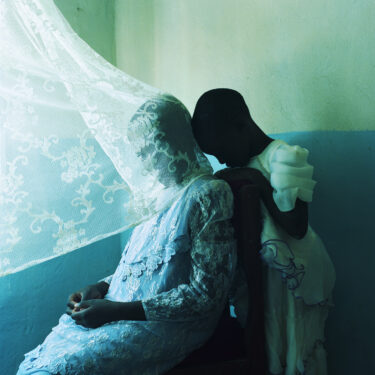
04
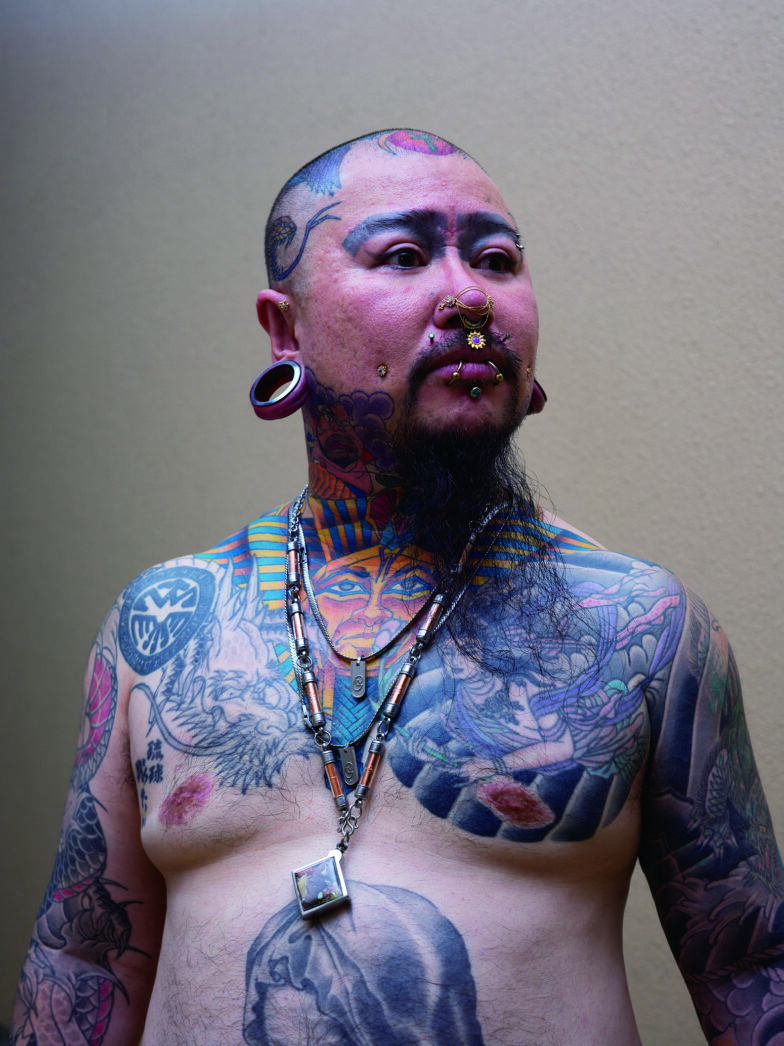
石川竜一、曽田浩隆
Ryuichi Ishikawa, Hirotaka Soda
showcase #14 "The Edge of Japan, and of the Japanese Language" curated by minoru shimizu
showcase #14, 2026
The Edge of Japan, and of the Japanese Language
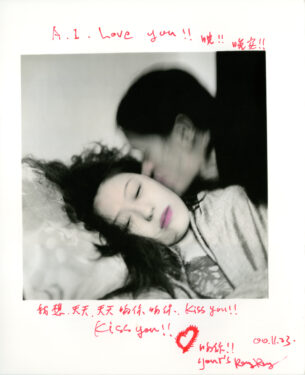
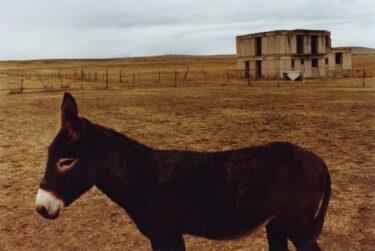
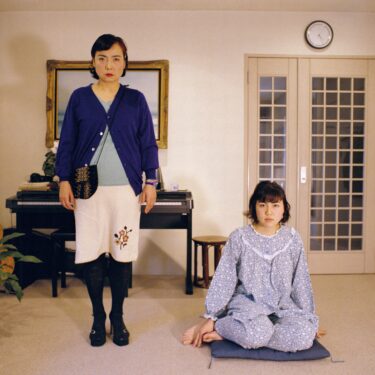
Ryuichi Ishikawa (1984–) likely needs no introduction. After gaining attention as an honorable mention in the 2012 Canon New Cosmos of Photography (selected by Minoru Shimizu), he won the prestigious Kimura Ihéi Award in 2014. Since then, he has been based in Okinawa and continues to be active. His signature work is the “Okinawan Portraits” series, which vividly captures diverse Okinawans—of different genders, races, and occupations—alongside their daily lives. This is the artist's second appearance since the 2014 showcase, "Portraits of Japan." Ten years later, he is once again confronting the theme of portraiture. Whereas the earlier Okinawan portraits vividly captured the people alongside their living environments, the new works seek to reveal the entirety of the individuals' lives—and, by extension, the present state of Okinawa—by delving deeper into each person.
“Calligraphy as contemporary art,” which has begun to attract attention in recent years, redefines calligraphy as a form of contemporary art that takes language as its subject matter and expresses language. At the cutting edge of this tendency is Soda Hirotaka (b. 1974). Taking language as one’s subject matter and expressing language equate to an awareness that words are in every respect readymades and that their essence is rooted in the fundamental political nature of human society. Words were not created by anyone in particular, but because they are not generated spontaneously, they are artificial things or “readymades” provided to newborn babies as things that are “already made.” Moreover, as a system of differentiated sounds, words are continually changing and from the outset there are no clear boundaries between one language and another. It was none other than the politics of “nationalism” that rose in the 18th century that caused them to separate into individual “languages.” As for systems of writing, these were invented by societies as they came to deal with large populations that exceeded the human faculty of memory and the accompanying large volumes of data and are clearly artificial things, which, as they reached the stage where they became linked to print media, changed from written records of individuals into norms in the form of orthographies. “National languages,” “native languages,” “writing” and “orthographies” are all products of politics. The very edge that politics has given to the Japanese language is the theme of Hirotaka Soda. Poetic phrases—whether original or quoted—are written on the canvas using asphalt repair material, yet this “Japanese” is spelled out in kanji and alphabet. Unorthodox spellings reflect the groundlessness of so-called standard orthography.
The 2026 showcase#14 is a two-person exhibition pairing Ryuichi Ishikawa, who attempts new portraits at Japan's edge, Okinawa, with Hirotaka Soda, who continues to question the edge of the Japanese language. This time, I have planned an exhibition blending the works of two artists. Come experience the resonance between these two distinct edges at the exhibition.
April 2026, Minoru Shimizu
eN arts
Open: 4.17 Fri. –5.17 Sun.
Closed: Mon. Tue. Wed. Thu.
12:00 - 18:00
Free
キュレーター | Curator: 清水穣 | Minoru Shimizu
プリント協力 | Printing support: キヤノン株式会社 | Canon Inc.