17
鈴木 幹雄
Mikio Suzuki
intersecting daily life
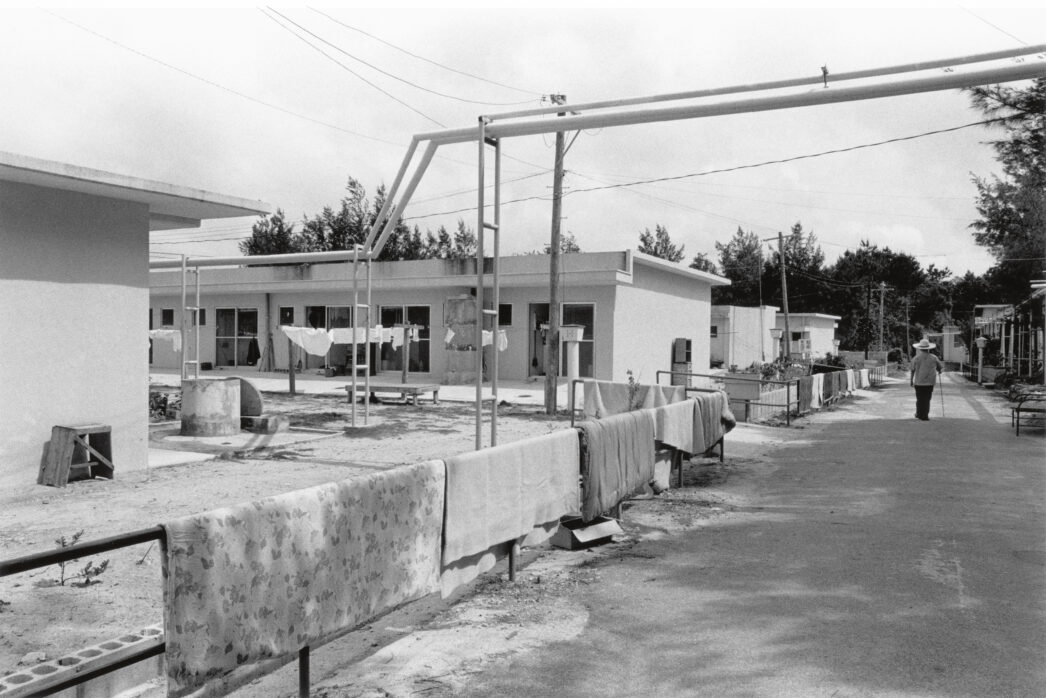
This is a photo exhibition by Mikio Suzuki, a photographer who recorded the lives of Hansen's disease survivors and patients at the National Colony Okinawa Airakuen in the 1970s. The venue is Kyusenkaku in Yumiya-cho, located at the foot of Kiyomizu-dera Temple.
On display are photographic works that record the daily lives of residents at Okinawa Airakuen and actual materials of daily necessities used in Airakuen. They are evidence of the activities that they have built and maintained their lives in isolation, and represent two kinds of lives: the ""daily life built"" and the ""daily life stolen.""
The daily life in the photos is also “another part of our daily life, ” which would have existed continuously in society without the national quarantine system. By displaying this exhibition together with a print of the Kiyomizu-dera Temple Pilgrimage Mandala, which shows the historical character of the area in Yumiya-cho, which used to be the approach to Kiyomizu-dera Temple, the viewer's “present daily life ” and their“ isolated daily life ” overlap spatially and historically, creating a place where the discontinuity and continuity intersect.
By experiencing this exhibition in the everyday space of the town hall, visitors will gain a physical and temporal experience of moving between the daily life we take for granted and the daily life that has been forfeited in isolation.
When these two aspects of daily life intersect, visitors will encounter the ""history inherent in their lives"" and the ""hidden existence of others.
kyusenkaku
67-8 Yumiyacho, Higashiyama-ku, Kyoto, Kyoto 605-0817, Japan
Open: 4.17 Fri.–5.6 Wed.
Closed: 4.20, 4.21, 4.27, 4.28
10:00 - 17:00
入場無料 | Free
協力 | Cooperation: Q、弓矢町 | Yumiyacho